Last updated: October 2026
Wondering how to clean pacifiers the right way? Wash them in hot, soapy water after every use, rinse well, and let them air dry on a clean towel. Sanitize them once a day by boiling for 5 minutes if your baby is under 2 months old, was born early, or has a weakened immune system. Older, healthy babies usually only need a careful wash. The same routine keeps baby bottles and nipples safe too.
Below you will find the CDC’s step-by-step method, a comparison of sanitizing methods, and the answers to the questions parents in Marietta, East Cobb, Alpharetta and Cumming ask us most often.
Table of Contents
ToggleHow to clean pacifiers and bottles the CDC way
The CDC recommends a four-part routine for every infant feeding item: wash, sanitize when needed, air dry, and store in a clean place. Pacifiers follow the same steps as bottle nipples because they spend just as much time in your baby’s mouth.
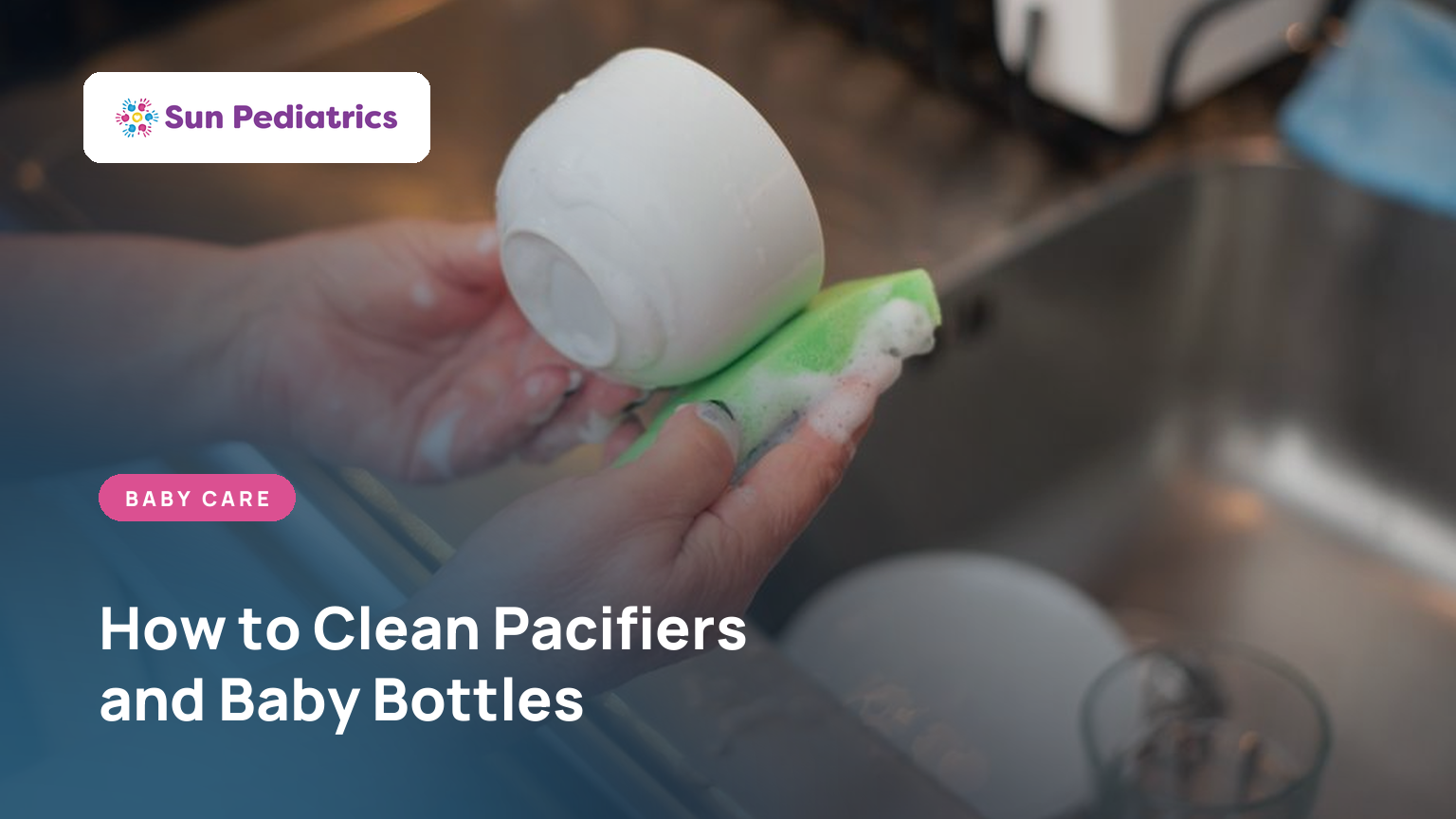
Here is the CDC’s hand-washing method, which works for pacifiers, bottles, nipples, rings and caps:
- Wash your hands with soap and water for 20 seconds before you touch anything.
- Take everything apart. Separate the nipple, ring, cap and bottle. Pull pacifier parts apart if the design allows it.
- Rinse under running water. Do not set the parts down in the sink. Kitchen sinks carry germs from raw food and dirty dishes.
- Wash in a basin used only for feeding items. Fill it with hot water and dish soap, then scrub each part with a brush you reserve for baby gear. Squeeze water through nipple holes to clear milk residue.
- Rinse again under running water or in a second clean basin.
- Air dry on a clean, unused dish towel or paper towel. Do not rub the parts dry, since towels can transfer germs back onto clean surfaces.
The CDC also asks you to wash the basin and brush every few days. If your baby is under 2 months, premature, or immunocompromised, wash them after every single use. [Source: CDC, How to Clean, Sanitize, and Store Infant Feeding Items]
If you are still figuring out feeding rhythms, our guide on how often a newborn should eat pairs well with this routine.
Do you need to sanitize pacifiers every day?
Not every baby needs daily sanitizing. The CDC says to sanitize feeding items at least once a day only when your baby is under 2 months old, was born prematurely, or has a weakened immune system from an illness or a treatment like chemotherapy.
For older, healthy babies, a careful wash after every use is usually enough. Many families in East Cobb still choose to sanitize a few times a week for peace of mind, and that is perfectly fine. Just know it is a bonus, not a requirement.
One shortcut matters here. If you run items through a dishwasher with hot water and a heated drying cycle or sanitize setting, the CDC says you do not need a separate sanitizing step at all. [Source: CDC, How to Clean, Sanitize, and Store Infant Feeding Items Frequently Asked Questions]
Sanitizing is also smart after an illness. If your baby just recovered from a stomach bug, run every pacifier and nipple through a full sanitizing cycle before using them again.
What is the best way to sterilize pacifiers?
Boiling is the simplest and most reliable way to sterilize pacifiers and bottle parts at home. Parents often ask how to clean pacifiers versus how to sterilize them, and the answer is that you always do both in order: wash first, then sanitize. The CDC lists four methods, and each one works when you follow the exact steps. Always clean items first, since sanitizing does not remove milk residue.
| Method | How to do it | Time | Best for |
|---|---|---|---|
| Boiling | Cover disassembled parts with water, bring to a boil, remove with clean tongs | 5 minutes | Any heat-safe pacifier, nipple or bottle |
| Steam | Microwave or plug-in steam sanitizer, follow the manufacturer’s directions | Per device, often 2 to 8 minutes | Busy households, daily sanitizing |
| Dishwasher | Hot water cycle plus heated drying or sanitize setting; small parts in a closed-top basket | One full cycle | Dishwasher-safe items only |
| Bleach solution | 2 teaspoons unscented bleach per gallon of water, soak fully, do not rinse, air dry | At least 2 minutes | When you cannot boil, steam or use a dishwasher |
The bleach method surprises many parents, but the CDC confirms it is safe. Any bleach left on the item breaks down quickly as it air dries, so skip the rinse. [Source: CDC, How to Clean, Sanitize, and Store Infant Feeding Items]
Two safety reminders. First, check the packaging before boiling or microwaving a pacifier. Some silicone and latex models warp with heat. Second, after boiling, squeeze any trapped hot water out of the nipple with clean hands. The American Academy of Pediatrics warns that hot water inside the nipple can burn your baby’s mouth. [Source: HealthyChildren.org, Baby Pacifiers and Thumb Sucking: What Parents Need to Know]
Can I clean a pacifier in my own mouth?
No. Popping a dropped pacifier in your own mouth feels harmless, but it moves your bacteria straight to your baby. The American Academy of Pediatrics says you should avoid putting a pacifier in your mouth and then giving it to your child.
The main concern is cavities. Tooth decay-causing bacteria move easily from mouth to mouth, and a baby who picks up those germs early is more likely to get cavities once teeth come in. The same advice applies to sharing spoons or tasting food before offering it. The AAP also says never to dip a pacifier in honey or any other sweetener. [Source: HealthyChildren.org, Why It’s Important to Take Care of Baby Teeth]
Keep a few clean pacifiers in a sealed case in your diaper bag instead. When one hits the floor at the Alpharetta playground, swap it rather than rescue it. If your baby is also teething, keep teethers in the same clean rotation.
How often should you replace pacifiers and bottle nipples?
Replace a pacifier or nipple the moment you see discoloration, tears, stickiness or a nipple that has gone thin and floppy. The AAP says pacifiers fall apart over time, and some brands print an expiration date on the package that you should not go past.
Make it a habit to inspect pacifiers once a week. Pull the nipple firmly and look for cracks near the base. Check that the shield is at least 1 and a half inches across with ventilation holes, and that the pacifier is one solid piece that cannot separate. [Source: HealthyChildren.org, Pacifier Safety]
Also follow the age range on the package. A newborn-size pacifier can fit entirely in an older baby’s mouth and become a choking hazard. Bottle nipples wear out on a similar schedule, so toss any that are cloudy, cracked, or that let milk pour instead of drip.
If you ever notice white patches in your baby’s mouth that do not wipe away, it could be thrush. Clean and sanitize every pacifier and nipple daily during treatment, and book a same-day sick visit so the pediatrician can confirm.
Is it safe for babies to sleep with a pacifier?
Yes, and the AAP actually recommends it. Offering a pacifier at nap time and bedtime helps reduce the risk of sudden infant death syndrome (SIDS). Use a clean one, and do not worry if it falls out once your baby is asleep.
That protection matters. The CDC reports about 3,700 sleep-related deaths among U.S. babies in 2022. A pacifier is one simple piece of a safe sleep routine, alongside placing your baby on their back in a bare crib. [Source: CDC, Helping Babies Sleep Safely]
A few AAP rules keep sleep-time pacifiers safe:
- Never tie a pacifier to the crib, or around your baby’s neck or hand. Cords can cause serious injury or death.
- If you are breastfeeding, wait until nursing is going well, which usually takes about 3 to 4 weeks, before introducing a pacifier.
- Never use a bottle nipple and ring as a pacifier, even taped together.
[Source: HealthyChildren.org, Baby Pacifiers and Thumb Sucking: What Parents Need to Know]
Safe sleep comes up at every early checkup. If you are expecting, our overview of what happens at your newborn’s first pediatrician visit shows what else you will cover.
How Sun Pediatrics can help
Our newborn services cover the questions that come up in the first weeks, from how to clean pacifiers to feeding, sleep and wet diaper counts. Every physician on our team is board certified, and we care for children from birth through age 18 at four North Atlanta offices.
If your baby has mouth sores, feeding trouble, fever or signs of a stomach bug, we offer same-day sick visits every day at our Marietta, East Cobb, Alpharetta and Cumming offices. In-office rapid tests for strep, flu, RSV and COVID are available, and secure video visits work well for quick questions. We also open a Saturday clinic from 9:00 to 12:00 on the first and third Saturday of each month.
We accept Medicaid and most insurance plans. Call 678-501-5601 or request an appointment online, and bring your cleaning questions to your next well visit.
Frequently asked questions
Can you clean pacifiers with just water?
A quick rinse is better than nothing, but it does not remove milk residue or the germs that grow in it. The CDC method calls for hot water, dish soap and a dedicated brush, followed by a clean rinse and air drying. If you are unsure how to clean pacifiers on the go, plain water works in a pinch, for example when a pacifier lands on a clean floor at home and your baby is older than 2 months and healthy. Follow up with a proper wash as soon as you can. For newborns, keep spare clean pacifiers nearby so you never have to rely on a rinse alone.
How long do you boil pacifiers?
Boil pacifiers for 5 minutes, the same time the CDC recommends for bottles and nipples. Take the pacifier apart if the design allows, cover it fully with water, bring the pot to a rolling boil, and start timing once it boils. Remove the pacifier with clean tongs and squeeze out any hot water trapped in the nipple before it cools. Let it air dry on a clean towel. Check the package first, because some pacifiers are not heat safe and may warp or crack after repeated boiling.
Can you put pacifiers in the dishwasher?
Yes, if the package says dishwasher safe. Place pacifiers and small bottle parts in a closed-top basket or mesh bag so they do not fall onto the heating element. Run a hot water cycle with heated drying or a sanitize setting. The CDC says this combination cleans and sanitizes in one step, so you can skip boiling afterward. Wash your hands before unloading, then air dry anything still damp. Silicone pacifiers tend to hold up better in the dishwasher than latex ones, which can break down faster with repeated heat.
How do you store clean pacifiers and bottles?
Once every part is completely dry, wash your hands, reassemble the bottles, and store everything in a clean, protected spot such as a closed cabinet used only for clean dishes. Keep pacifiers in a lidded case rather than loose in a drawer or diaper bag. Avoid putting damp items away, since trapped moisture lets mold grow. If you use a drying rack, reserve it for baby items only and sanitize it every few days, or daily if your baby is under 2 months, premature or immunocompromised.
This article is for general information and is not medical advice. Contact your pediatrician for care specific to your child.